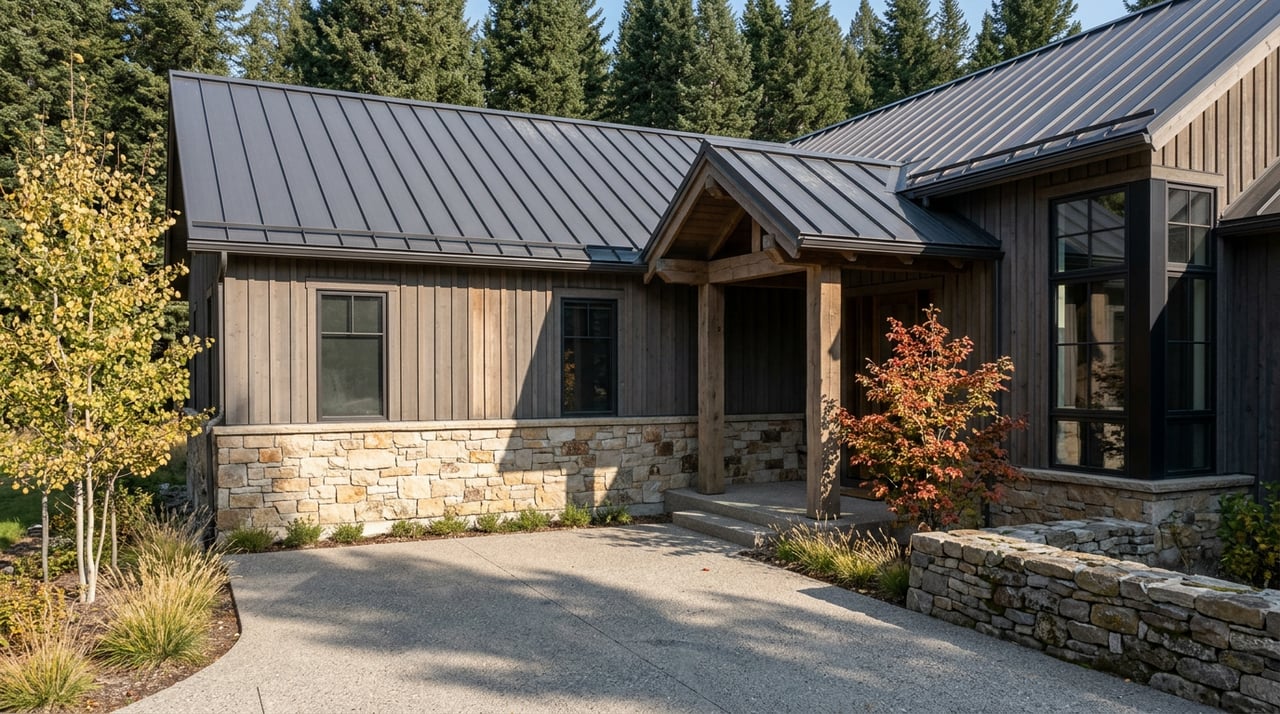
Ask anyone who has lived through a few Big Sky autumns and they will tell you the same thing about the last week of September. The bikers who filled the trails in July are gone. The wildflower crowds thinned out weeks ago. Restaurants trim their hours, some close outright for a stretch, and Town Center settles into the hush that carries it toward opening day. It is the town's exhale, the pause between summer traffic and the first lift line of the season.
This year that pause has an interruption scheduled directly into it. The inaugural Big Sky Food & Wine Festival runs Thursday through Saturday, September 24 through 26, 2026, staged at the Big Sky Events Arena on Aspen Leaf Drive, and organizers built it specifically to land during the week Town Center usually goes still.
Why this particular week, and not another
The timing was not an accident. Founder JD Hock, a Bozeman entrepreneur who also co-founded the Alpenglow Music Festival, has said plainly that the goal was to catch Big Sky right before it clears out for the season and pull people back to town before that happens, describing the plan to Explore Big Sky as an effort "to anchor out and bring people back to town."
That framing matters if you live here, because it means this event was designed around the exact gap residents already know by feel. Big Sky's shoulder season has a well-documented shape: visitor guides describe the stretch right after Labor Day as an underrated quiet spot, with crowds thinning sharply, aspens turning gold, and lodging rates dropping as the town winds down ahead of winter prep. The festival organizers read that same pattern and decided to fill it rather than let it run its usual course.
What's actually landing at the Events Arena
The festival's centerpiece is a ticketed Grand Tasting Tent open Friday and Saturday from 4 to 10 p.m., built around more than 40 Michelin-starred and James Beard Award-winning chefs and more than 25 winemakers. Ming Tsai, the chef behind Big Sky's own BāBā, hosts the weekend and emcees Culinary Stage demonstrations featuring Jeremy Ford, Marc Forgione, Eduardo Garcia, and Nancy Silverton, the La Brea Bakery and Mozza Restaurant Group co-founder who won the James Beard Foundation's Outstanding Chef award in 2014.
A few numbers worth holding onto if you live nearby:
- Organizers expect between 1,500 and 2,500 guests across the weekend, a scale intended to feel closer to a community gathering than a mega-festival
- General admission runs $600 for a single day or $1,000 for the full weekend package; VIP runs $1,200 single day or $2,000 for the weekend
- The event is 21 and older, no exceptions, including infants
- Grand Tasting pours come from producers like Krug, Dom Pérignon, Joseph Phelps, and Peter Michael, alongside Montana craft breweries and distilleries
- VIP passholders get access to The Reserve, a separate tasting tent, and The Hideaway, a speakeasy-style bar experience
That is a serious lineup for a first-year event, and it is arriving with the production budget to match.
The part that's easy to miss if you're not local
Buried under the Michelin-star headlines is a detail that matters more to residents than to anyone flying in for the weekend. Organizers have said locals will get early-bird ticket specials and reduced-rate community sponsorships, a deliberate carve-out separate from the general public sale. The festival is also sourcing most of its ingredients from Montana farms and ranches, and proceeds benefit the Big Sky Community Food Bank.
None of that changes the ticket math for a weekend package that still starts at $1,000 a person. But it does mean the festival was built with an awareness that it is happening in someone's neighborhood, not just on a calendar someone in Bozeman drew up in a conference room.
The parking question nobody's answered yet
Here is where residents should pay closer attention than the festival's own marketing has covered so far. As of this writing, the Big Sky Food & Wine Festival has not published its own parking or shuttle plan. But the venue has a track record worth reading.
Big Sky Events Arena already hosts Big Sky PBR, one of the region's biggest annual draws, along with the Wildlands Festival, and both events tell the same story: on-site parking is limited, and organizers explicitly direct overflow traffic toward public lots near Town Center. PBR's own event guidance puts it bluntly, telling attendees to carpool, walk, or find a public parking lot near Town Center because designated arena parking fills fast. Big Sky also has no Uber or Lyft service, a detail past events like Peak to Sky have had to spell out for visitors expecting rideshare as a backup.
What that history suggests for late September is straightforward. When the Events Arena draws a crowd, Town Center's own lots become part of the parking solution whether the festival plans it that way or not. Residents who know this pattern from PBR week should expect a similar version of it, just compressed into three days instead of a full week.
Where the rest of the weekend actually happens
The festival's footprint does not stop at the arena gates, which is worth knowing if you assume the disruption is contained to one building. Friday night, Ming Tsai is joined by chef Akira Back, whose namesake restaurant opened inside One&Only Moonlight Basin last year, for an eight-course dinner poured with Dom Pérignon and Krug. Saturday night shifts the action again: chef Wei Chen hosts an omakase dinner at Backcast, the restaurant inside Montage Big Sky at Spanish Peaks, while Nancy Silverton and Marc Forgione host a pizza party at Tips Up. The weekend closes with a Chef's After Party at Buck's Roadhouse, both Tips Up and Buck's Roadhouse sitting in Big Sky's town core.
So the arena is the anchor, but the actual weekend spreads across Moonlight Basin, Spanish Peaks, and the restaurants residents already know in town. If you live in Town Center expecting the festival to stay confined to Aspen Leaf Drive, plan on seeing its ripple in your own regular spots too, particularly Friday and Saturday evenings.
What this means once the tents come down
Here is the piece that actually answers the question residents are asking without saying it out loud: does this kill the quiet week, or just move it?
The honest answer is neither. Big Sky Resort's next winter season begins with daily lift operations on November 25, 2026, which puts roughly two months between the festival's Saturday night closing party and opening day. That stretch, not the festival weekend, is still where the real hush lives. What the festival does is take three specific days out of what used to be a slow, gradual wind-down and turn them into the loudest weekend of the fall, then hand the rest of the shoulder season back to its usual quiet.
For anyone who has lived through enough Septembers here to know the rhythm by muscle memory, that is the actual shift worth understanding. The lull isn't gone. It's just been pushed a few days later and compressed into a shorter, sharper version of itself, bookended by a festival on one side and the first lift of the season on the other.
If you're weighing what a neighborhood like this looks like across a full calendar year, not just during peak weeks, that's exactly the kind of texture worth talking through with someone who tracks it season to season. Sandy Revisky De Leon has spent 27 years watching how Big Sky's shoulder seasons actually behave, festival or no festival. Let's Get Started.